

Capital begins with a business decision
Established businesses rarely pursue financing because they want debt for its own sake. They pursue it because a decision has arrived: add equipment, acquire a competitor, carry a larger contract, refinance an expensive obligation, expand a facility, purchase an investment property, or create enough working room to execute the next stage of growth.
That decision is the beginning of the financing story. Before discussing a product, a term, or a provider, define the operating move the capital is meant to support. A reviewer should be able to understand what the business intends to do, why the timing matters, and what becomes possible if the plan is funded appropriately.
The objective is not to make the opportunity sound perfect. It is to make it understandable, supportable, and ready for serious evaluation.
Build the request around five questions
A clear request answers five questions without making the reviewer assemble the story from scattered documents.
- How much capital is needed? Use a grounded number tied to the actual project—not a wide range without explanation.
- What will the funds do? Break the request into specific uses such as equipment, inventory, acquisition cost, construction, refinancing, or working capital.
- Why now? Explain the deadline, opportunity, season, contract, closing date, or operating pressure behind the timing.
- How does the business support repayment? Connect the request to current cash flow, expected operating improvement, collateral where applicable, and realistic assumptions.
- What could change the outcome? Identify material risks, dependencies, or unresolved facts before someone else discovers them late in the process.
Make the amount defensible
The requested amount should tell the same story as the use of funds. If a business needs equipment, installation, freight, training, and a working-capital cushion during ramp-up, the request should account for the complete move. Underestimating the project can create a second capital problem before the first one has produced results.
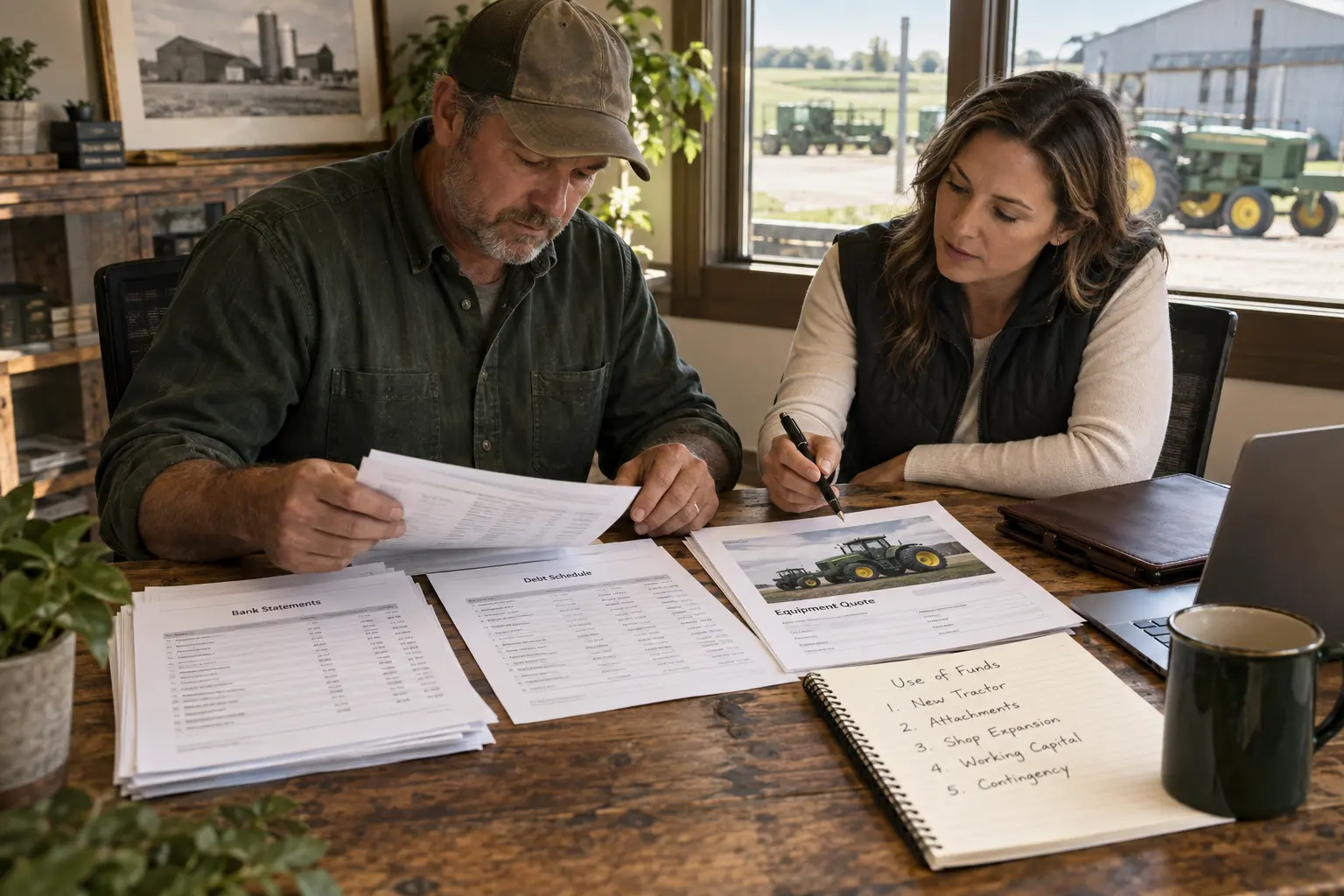
At the same time, every dollar should have a job. A simple use-of-funds schedule creates discipline and gives a reviewer something concrete to evaluate. For an acquisition, that may include purchase price, closing expenses, initial working capital, and planned improvements. For expansion, it may include buildout, machinery, deposits, inventory, and a reasonable contingency.
Precision builds credibility. It also helps determine whether one facility can address the need or whether the opportunity may require more than one structure.
Let the operating record carry the story
Financial documents matter because they show how the business actually operates. Recent bank statements can reveal cash movement and seasonality. Tax returns provide historical context. A year-to-date profit and loss statement and balance sheet show the current picture. Receivables, payables, and debt schedules explain what is tied up, what is due, and where existing obligations sit.
But documents without explanation can create unnecessary uncertainty. If revenue dipped because a major project was delayed, say so. If margins improved after a pricing change, show when it happened. If one-time equipment repairs affected a period, identify them clearly. If the business is seasonal, compare the right periods rather than allowing an incomplete snapshot to define the company.
A credible narrative does not argue with the numbers. It helps the numbers make sense.
Prepare for the questions behind the documents
Commercial financing is fact-specific. Different structures and capital providers may evaluate cash flow, collateral, guarantor strength, industry conditions, property performance, customer concentration, or transaction experience differently.
That is why preparation should go beyond collecting files. Be ready to explain ownership, management experience, existing debt, major customers, vendor dependencies, recent changes, and the operational plan after funding. For real estate, organize leases, rent rolls, expenses, insurance, taxes, property condition, and the business purpose. For equipment, organize the quote, seller, specifications, useful life, and the revenue or efficiency the asset is expected to support.
The goal is not to anticipate every possible underwriting question. It is to remove preventable confusion and respond to reasonable questions with organized facts.
Treat timing as a workstream
A target closing date is not a strategy by itself. Work backward from the business deadline and identify what must happen before capital can be available: complete application information, document collection, third-party reports, property or equipment details, provider review, verification, underwriting, conditions, and final documentation.
Some opportunities move quickly when the facts are clear and the requested structure fits an available program. Others require additional diligence, outside reports, negotiation, or more complex documentation. Avoid building an operating plan around an assumed approval or funding date until the responsible provider has confirmed the requirements and progress.
Early preparation protects options. It gives the business time to correct missing information, explain unusual items, and evaluate whether the proposed structure fits the actual need.
Bring forward the hard facts
The strongest financing presentations are not the ones with no difficult facts. They are the ones that address those facts directly. A prior credit event, customer concentration, tax obligation, recent ownership change, uneven month, or unusual transaction structure does not improve by appearing late.
Disclose material issues early, explain the circumstances accurately, document what changed, and show how the business is managing the risk now. This allows the opportunity to be evaluated on its real merits and reduces the chance that time is spent pursuing a structure that cannot accommodate the facts.
The financeable story is clear, not flashy
A serious capital request should sound like the business itself: specific, grounded, and accountable. The amount matches the project. The use of funds is visible. The financial record is organized. The unusual items are explained. The repayment path is supportable. The timing reflects the work still required.
Greathouse Growth Capital helps established businesses, investors, agricultural operators, and professional referral partners organize qualified business-purpose opportunities and pursue suitable structures through lender and capital-provider relationships.
The best first step is a concise preliminary review. Bring the amount, purpose, timing, operating history, and central challenge. From there, the conversation can focus on whether the opportunity appears to fit available programs—and what facts or documents should come next.